Guyana Digital School platform will build ‘One Caribbean’ future—President Ali – Guyana Chronicle
— announces country’s first robotic surgery will be conducted next year
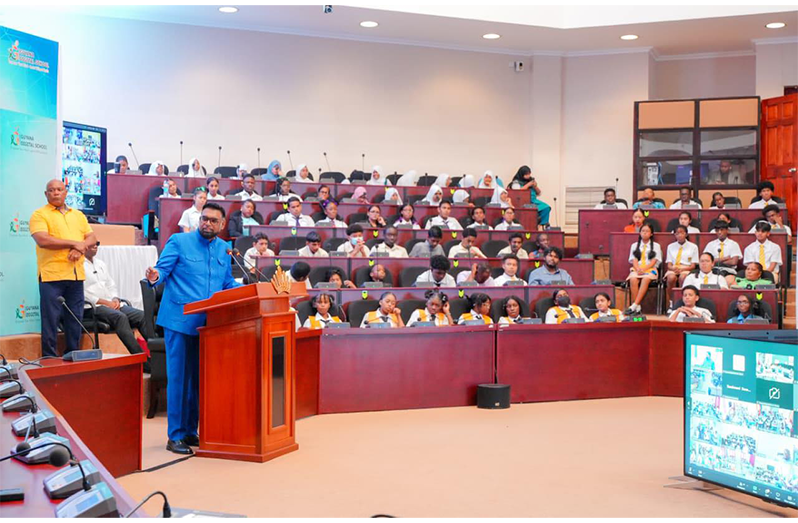
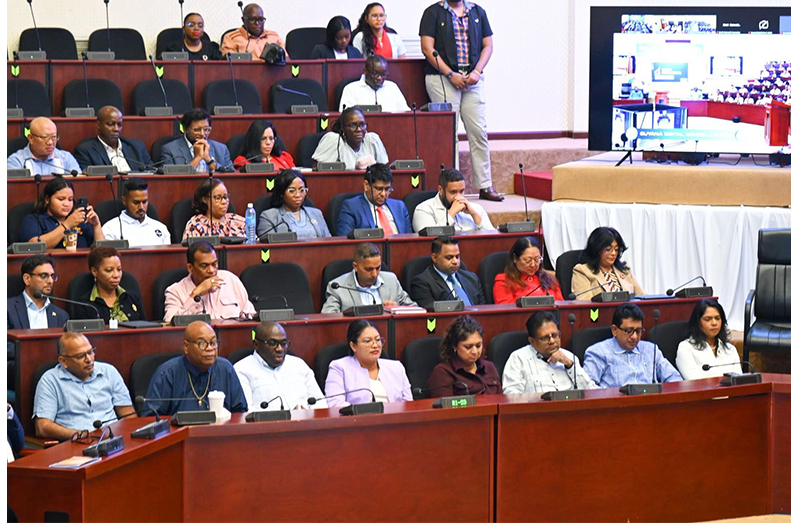
PRESIDENT Dr Irfaan Ali on Friday heralded the Guyana Digital School (GDS) as a transformative national and regional investment, declaring that the newly launched platform will help forge a unified Caribbean where learners share one learning space and one future.
Speaking at the Arthur Chung Conference Centre (ACCC), the President said the initiative represents one of the most important steps the region has taken toward educational equality and integration.
“This is a day when children from Barbados, Belize, St Lucia, St Kitts and Nevis, Montserrat—wherever in the Caribbean—and Guyana could be in one classroom, one environment, sharing one story,” he told a packed audience of students, teachers, government officials and regional representatives.
“We are building a future where our children not only see themselves as one Guyana, but one region, uplifted by each other.”
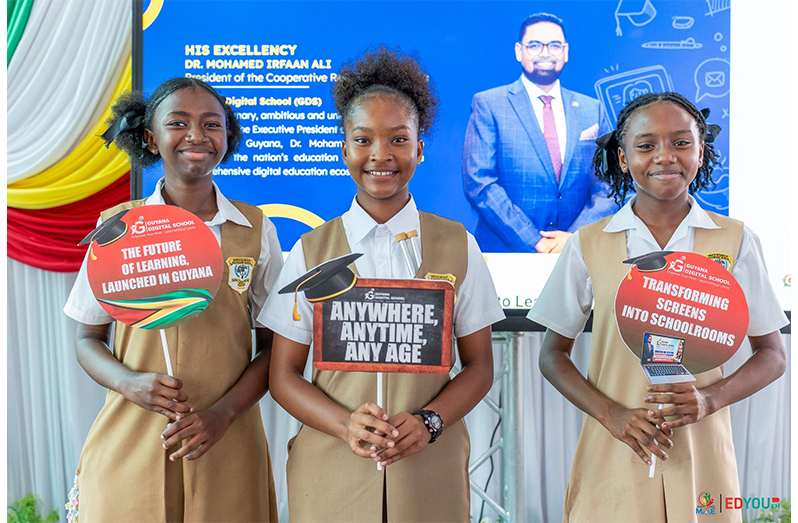
Describing the event as both historic and emotional, President Ali said the digital school is rooted in values of dignity, equity, and love—principles he believes must underpin the society Guyana is now shaping. Many generations before, he said, lived lives constrained by poverty and lack of opportunity. Today’s learners, however, are being given access to tools and platforms their grandparents could scarcely imagine.
“This is about dismantling barriers and removing differences,” he said.
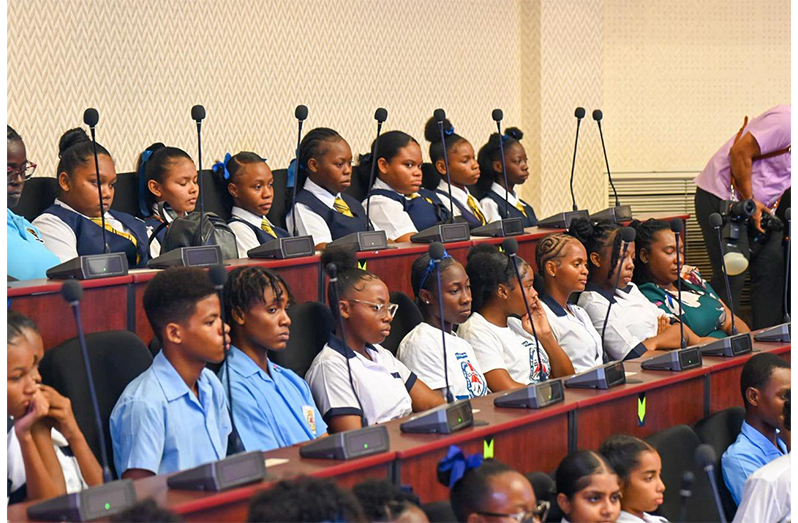
He indicated that a child from Parika or Leonora, or from Regions Six or Ten, should no longer face different treatment when they come to Georgetown. He emphasised that the country is dismantling barriers of accent, culture, style and background in pursuit of one Guyana with one mission and one future.
The President emphasised that education must not become a space shaped by negativity or division, telling learners that their school life should be a place of friendship, encouragement and collective learning—not competition, conflict or comparison.
“Life is about building friendships. It’s about learning about each other. It’s about supporting.
It’s not about fighting. It’s not about guns. It is channelling your energy in the right direction. It is about using every moment before you to uplift yourself and those around you in a positive way.”
Calling the launch a “landmark moment in our nation’s long journey for educational excellence, Dr. Ali saluted teachers, stakeholders and generations of Guyanese who, despite difficult circumstances, helped pave the way for today’s achievements.
The digital school, he said, ensures that learners—regardless of income, geography, background or circumstance—gain access to the tools required for the future economy.
The initiative, he argued, is not merely an education project but a national and regional development project, an economic transformation programme, and even a “survival project” for the Caribbean. With the world undergoing rapid technological change, Guyana, he said, cannot afford to fall behind.
FOURTH INDUSTRIAL REVOLUTION
He explained that the world is now in the age of the Fourth Industrial Revolution, driven by data, automation, robotics, artificial intelligence, biotechnology, connectivity and digital integration. He warned that countries unable to master this new wave risk being left behind.
To illustrate the point, he highlighted advances in medicine, including robotic surgeries now conducted remotely, and said similar technological shifts are occurring in agriculture, manufacturing, finance, transport, and governance.
Guyana will perform its first robotic-assisted surgery next year, with United States-based specialists using advanced technology, President Ali revealed at the launch.
The Guyana Digital School, he said, is designed to prepare students for this world by exposing them to digital labs, virtual learning, and practical experiences in simulated high-tech environments.
President Ali noted that for decades, developing nations carried the weight of a profound digital divide, one that limited the ability of citizens to compete globally. In high-income countries, he said over 90 per cent of households have reliable internet access.
In low-income nations, that number can fall below 40. Many learners in advanced economies have multiple digital devices before age 18, while millions in developing regions encounter their first computer only after secondary school.
“These gaps must be closed, not gradually or casually, but quickly, intentionally and comprehensively,” he stressed. “Digital education is not optional. A digital workforce requires digital skills, and digital skills require digital learning.”
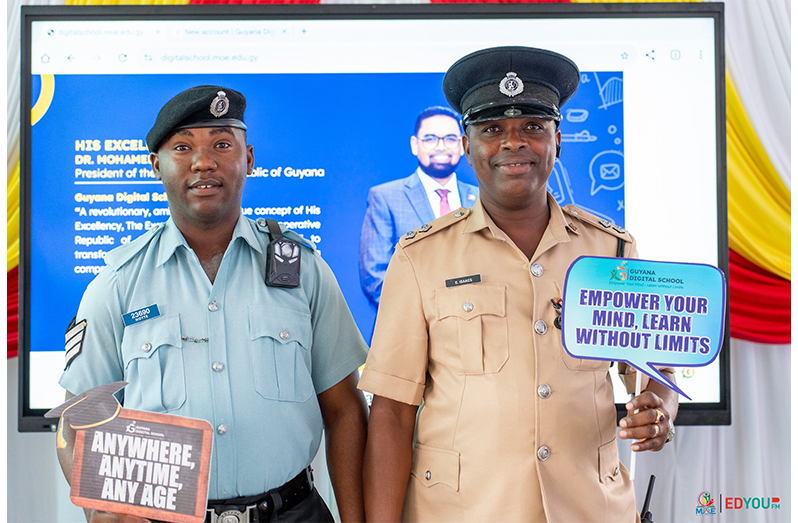
The President acknowledged the challenges exposed during the COVID-19 pandemic, when teachers, students and families struggled with limited connectivity and unfamiliar online tools. Yet, he said, the experience was a lesson in the importance of preparedness and accelerated Guyana’s recognition that digital learning is essential for resilience.
With dozens of hinterland and riverine communities across the country, the President said investments in connectivity, infrastructure and digital platforms are now being fortified by the Guyana Digital School, which functions as a central hub for content creation, training and delivery.
One of the most significant features of the Guyana Digital School is its digital library, which will house all textbooks required for exams administered by the Caribbean Examinations Council (CXC) and other levels of study. President Ali said this will eliminate barriers caused by limited access to learning materials.
“All our children will now have no excuse when it comes to textbooks,” he said, “and imagine the power of that.”
He added that the platform will also support adult learners, out-of-school youth, teachers seeking training, and persons with disabilities. Ultimately, he said, the school is designed to close both the digital and opportunity divides.
President Ali urged students to appreciate the moment they are living in, explaining that the country is preparing the economic and technological foundation they will inherit in 2050.
According to him, data centres, innovation hubs, and advanced industries are part of the long-term vision, and the Digital School is among the investments that will define Guyana’s future competitiveness.
“The jobs our children will compete for may not exist a decade from now,” he said. “The technologies they will use may not be invented. The school is not simply a response to the present; it is an investment in the future. It is the declaration of a country that knows where it’s going and refuses to be left behind.”
He concluded by thanking the Ministry of Education, the Ministry of Public Service and all agencies and individuals who worked “tremendously hard” to bring the Guyana Digital School to life.
“This is just the beginning of an era,” President Ali said. “We will walk this journey together, strong, united, with dignity, honour and love.”