
WI selectors try new approach to development – Guyana Chronicle
By Bryan Davis
THE West Indies cricket selectors have come up with a fresh idea for choosing their team to participate in international cricket in 2023.
They have selected two teams of 13 players each from available cricketers.
Although in effect, trial matches, to ensure seriousness, have been enhanced with first-class status.
Guyana won the recent regional tournament with a superb win against the Leeward Islands in the final round of competition. It was the victory of a terrific team that was well balanced in all departments, plus they were united in team spirit and determination – which translates as well led by the captain Leon Johnson, who had announced before the start of the series that he would retire at the end of it. A surely super way to say goodbye!
Then, in a new twist to competition, Cricket West Indies decided to hold a contest between two teams of the best players, in their selectors’ opinion, named after two great West Indian cricketers of the past, whose names embellish the prize the regional teams compete for, the Headley/Weekes trophy – named for George Headley and Everton Weekes.
Both teams consist of 13 players each. There is an added team, for flavour, the Emerging Players.
However, because there are no really outstanding players to speak of, it became a very interesting exercise. And, I guess, the hope of Sir Desmond Haynes, the lead selector and his fellow selectors, is to come up with a competitive bunch of the recent regular players, plus some exciting and worthy newcomers who could develop into mature and confident cricketers of the future.
It was wise and interesting to see them give Joshua Da Silva, WI wicketkeeper, the opportunity to gain the experience to lead at this level, as he seems one for the future, based on the observation of his cricket at the top level and the way he’s always in the game and spurring his team on.
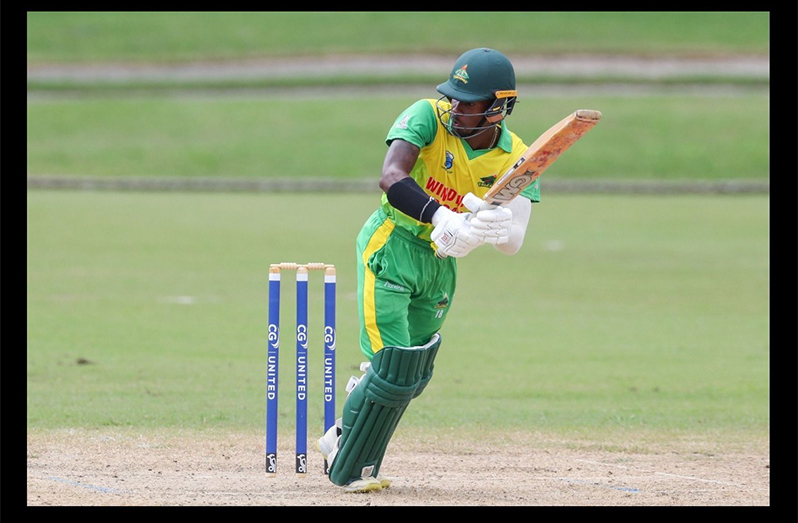
Also Alick Athanaze, captain of the Hurricanes, a fine cricketer who forces himself to be noticed by his maturity and his natural ability, together with a hint of leadership qualities which could be enhanced by this opportunity and the right approach.
Da Silva and Athanaze are two exciting cricketers who hopefully will develop, from this chance in their learning curve, to continue their development by listening and sifting advice from respected and recognised cricket experts, in addition to some reading of the game, in order to broaden their perspective on how to satisfy one’s players and allow them to achieve at the highest level.
By doing this, one will doubtlessly improve one’s own game. There’s nothing better than one’s own experience.
Selection
If the selection of cricket teams were based only on statistics, there would hardly be any need for selectors. A group of administrators could get together and pore through the figures and pick those with the best analyses in batting and bwling.
The problem with that is, you wouldn’t get the best team, and those who have scored well during a season or tournament can very well fail to fire when chosen to play at a higher level.
Although, of course, the stats are vital for recognition and direct the player to positions for observation, what is noteworthy is that a player’s lower achievement does not necessarily indicate someone with less ability. That is precisely why selectors should be knowledgeable, not only of the intricacies of the game itself, but also of the character of the cricketer, whose temperament and depth of emotional control should add up to the manner in which he handles himself in particular situations.
Hence, a selector must observe the way a player conducts himself while playing an innings, in his approach at various situations the state of the game might impose, for instance how his bowling stands up after being struck for some boundaries.
Of course, I’m applying principles pertaining to the game of cricket where the bowler is not limited to a number of overs, but combines his art of bowling with attempting to exploit a batsman’s weakness in order to dismiss him or to reduce the run rate, using strategic field-placing to gain an advantage over the batting team.
And that is what cricket is about and why the selection of teams has to do with selectors reading a cricketer’s value through his natural ability, temperament, and disposition, plus a fighting, never-say-die spirit. (TT Newsday)