Caribbean Law Enforcement officials meeting in Guyana on asset recovery across the region – News Source Guyana
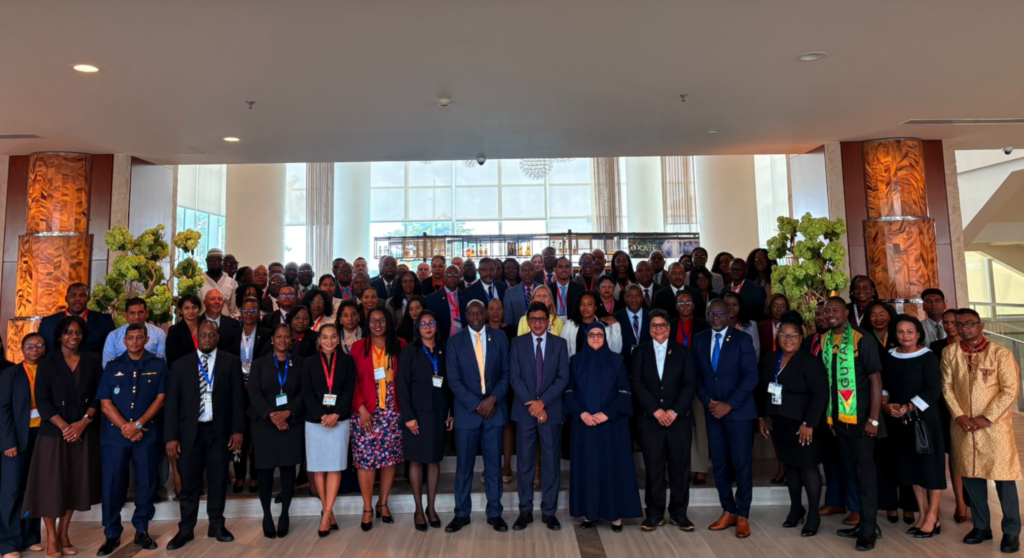
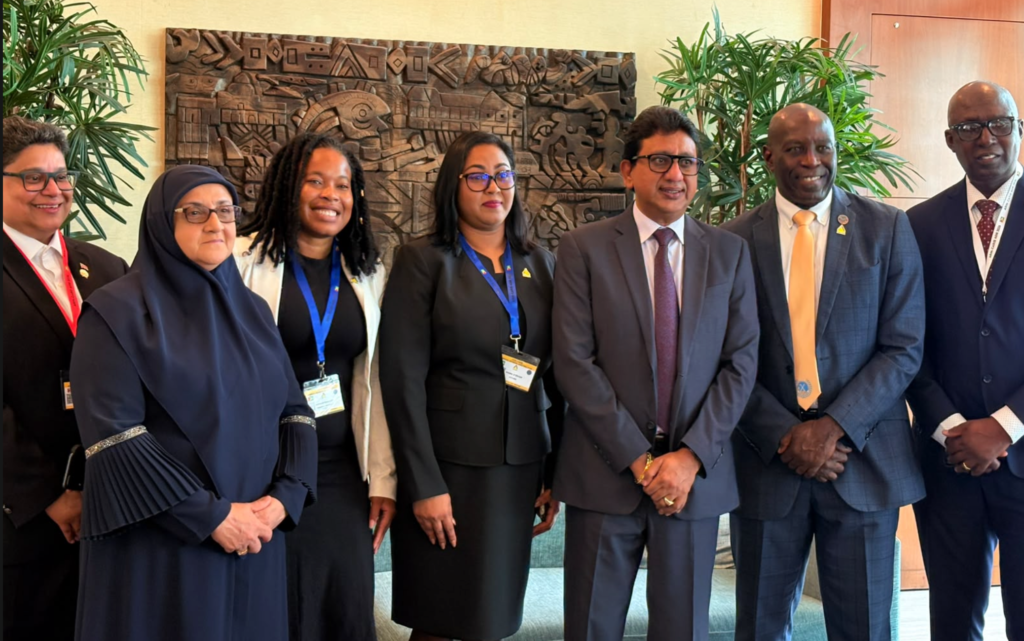
The Annual General Meeting and Steering Group Meeting of the Asset Recovery Inter-Agency Network for the Caribbean, opened this morning at the Guyana Marriott with calls for countries within the region to deepen regional and international collaboration to effectively combat transnational organized crime.
Deputy Executive Director of the Regional Security System (RSS), Atlee Rodney, said the meeting presents an opportunity for the Region to reaffirm its shared commitment to regional security, international cooperation and collective resilience.
Noting that criminal networks do not recognize national borders, the RSS Deputy Executive Director said the Region’s response must be equally coordinated, agile and united as he underscored the importance of regional and international cooperation.
“We must deepen regional and international collaboration. No member state can effectively combat transnational organized crime alone. In partnership with the IDB, the RSS is advancing the development of a Caribbean framework for Joint Investigation Teams,” Rodney said.
During a Legal Forum hosted by the Office of the Attorney General of Barbados earlier this year, a road map was established for securing the legal and institutional support necessary to implement the regional framework, the RSS Deputy Executive Director said.
Importantly, he said countries within the region must also continue to strengthen their legislative and policy frameworks to keep pace with increasingly sophisticated criminal enterprises.
“As the coordinating secretariat for ARIN-CARIB, the RSSHQ continues to work closely with the Steering Committee and strategic partners, including the European Union, the EL PACCTO 2.0 Prograrnme, and the Inter-American Development Bank (IDB), to strengthen the Caribbean’s legal framework for international cooperation. This work includes the development of a Model Agreement for Joint Investigations, the review of domestic legal frameworks governing international cooperation, and the enhancement of mutual legal assistance mechanisms to facilitate the effective exchange of information and evidence across jurisdictions,” he said.
Rodney also spoke of the importance of building capacity by investing in people.
He said for its part, the RSS is developing a suite of structured training programmes designed to professionalize criminal justice practitioners, particularly those involved in financial investigations and asset recovery across the region.
The programmes will be delivered to the full ARIN-CARIB membership, thereby strengthening their investigative and operational capabilities through the Caribbean.
Already, through a Joint Investigation Team Network, the RSS has trained more than 200 criminal justice practitioners.
Guyana’s Attorney General, Anil Nandlall, told the meeting that asset recovery is no longer simply about identifying proceeds, but is also about transforming the way institutions cooperate, strengthen their legal frameworks, and enhance public confidence in the administration of justice by ensuring criminals do not retain the financial rewards of their illicit activities.
He said confiscation must be used as an effective instrument of justice, rather than merely an aspiration contained within the legislation.
Mr. Nandlall said criminal organizations have become highly sophisticated, collaborating across borders, and law enforcement authorities must collaborate even more to bring them down.
“The criminal the criminal landscape has changed dramatically over the past decades. The criminal organizations we confront today bear little resemblance to those of the past. They are highly organized, technologically sophisticated, financially resourced and increasingly global in their operations. Criminal proceeds are transferred across jurisdiction within seconds. Assets are concealed behind complex corporate structures, virtual assets and professional facilitators. Criminal networks cooperate across borders with remarkable efficiency, exploiting differences between legal systems and jurisdiction boundaries to frustrate investigations and avoid prosecution. Today, organized crime is rarely confined within national borders – drug trafficking, firearm trafficking, cyber-enabled fraud, corruption, environmental crime, human trafficking, illegal wildlife and trade-based money, [and] money laundering are increasingly interconnected…If criminals have learnt to collaborate without regard for borders, then governments, prosecutors, investigators, and financial intelligence units must collaborate even more effectively. This is why institutions such as our ARIN-CARIB have become indispensable,” the Attorney General reasoned.
He said international cooperation can no longer be a desirable objective, but an operational necessity.
The Attorney General said here in Guyana, the Government has taken steps to strengthen the country’s Anti-Money Laundering and Countering the Financing of Terrorism framework, resulting in institutional strengthening, enhanced cooperation and expanded international cooperation.
Director of Public Prosecutions (DPP), Senior Counsel Shalimar Ali-Hack said the region must transform its approach to successfully investigate transnational crime, trace assets and actively strip transnational organized crime networks of their proceeds of crime.
“Networking allows members to use informal channels to request crucial information to advance our investigations. As a region our response should aspire to be seamless,” the DPP said.
The three-day meeting is being held under the theme “From Tracing to Transformation: Building an Asset Recovery-Ready Caribbean.
Justice of Appeal of Trinidad and Tobago, Gillian Lucky; Deputy Executive Director of the Caribbean Financial Action Task Force (CFATF), Wendell Lucas; Principal Director of Jamaica’s Financial Crimes Investigation Branch, Keith Darien and law enforcement officers from across the region are among those attending the meeting.