Antigua Just Got 5,800 Newly-Planted Corals in Its Biggest Reef Restoration Year Yet – Caribbean Journal
AnuBlue says its latest restoration work covered about 2.3 acres of reef around Antigua, with planted corals recording an 84 percent survival rate.
Beneath the water around Antigua, thousands of new corals are taking hold.
AnuBlue, the nonprofit formerly known as Elkhorn Marine Conservancy, says it has completed its most successful year of coral restoration since the organization was established in 2021, planting more than 5,800 nursery-grown corals across reefs around the island.
The restoration covered approximately 2.3 acres of reef — an area the organization says is roughly equivalent to two American football fields.
Perhaps the most significant number is 84 percent: that’s the survival rate AnuBlue has recorded among the corals planted at its restoration sites.
It’s a major expansion of marine conservation work on an island where the sea is inseparable from the travel experience. Indeed, Antigua has quietly become one of the Caribbean’s top snorkeling destinations, thanks in large part to the reefs that hug so much of its coastline.
Restoring two major reef areas
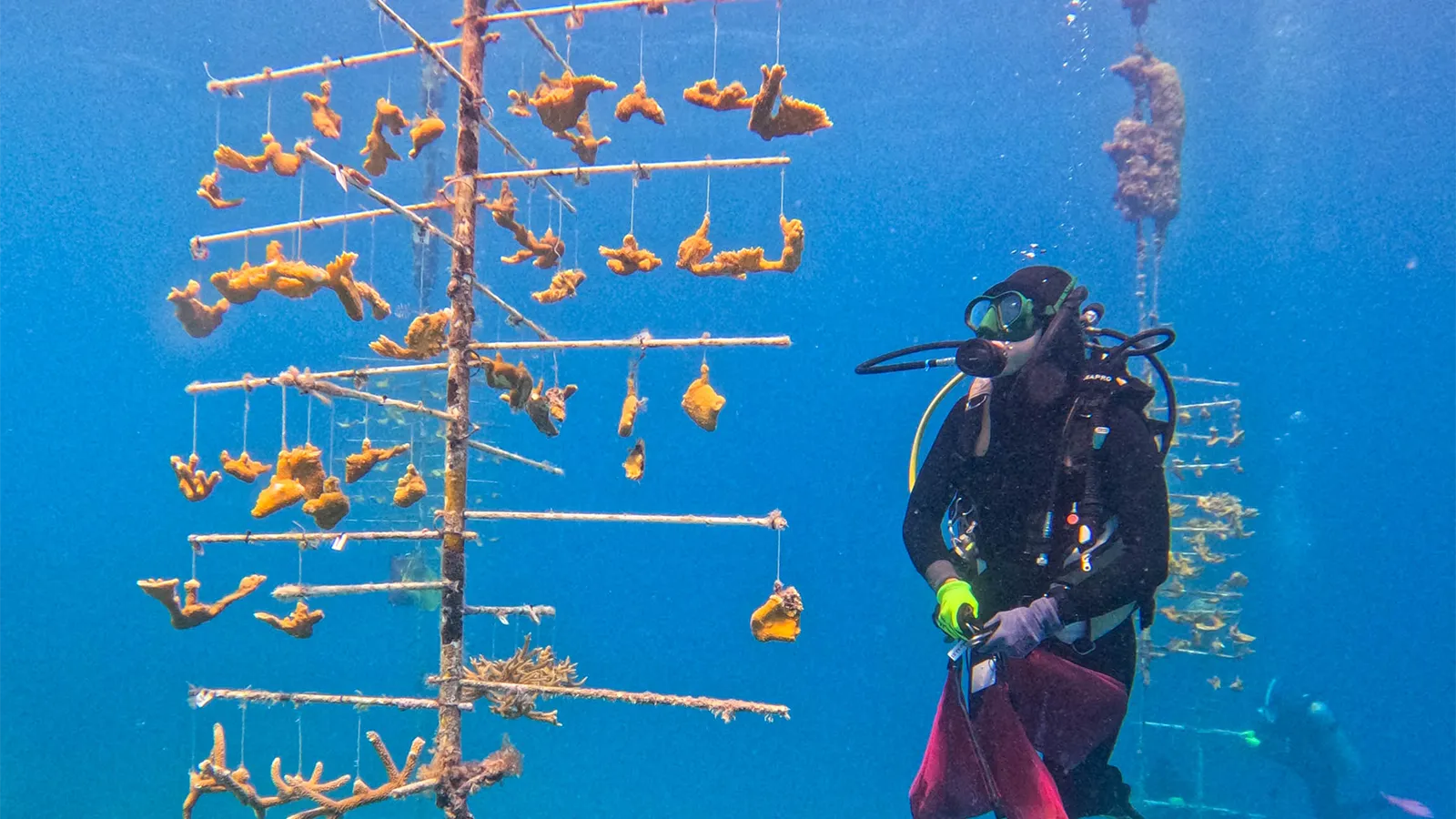
AnuBlue operates what it calls Antigua and Barbuda’s largest active coral restoration program, centered on four coral nurseries and five restoration sites.
Those sites are spread across Cades Reef and the North East Marine Management Area, or NEMMA, two important marine ecosystems around Antigua.
Corals are grown in the nurseries before being transplanted onto reefs, allowing the organization to expand restoration beyond individual experimental sites and plant across multiple reef areas.
The program brings together marine scientists, fishermen, divers and volunteers, combining scientific restoration with local participation.
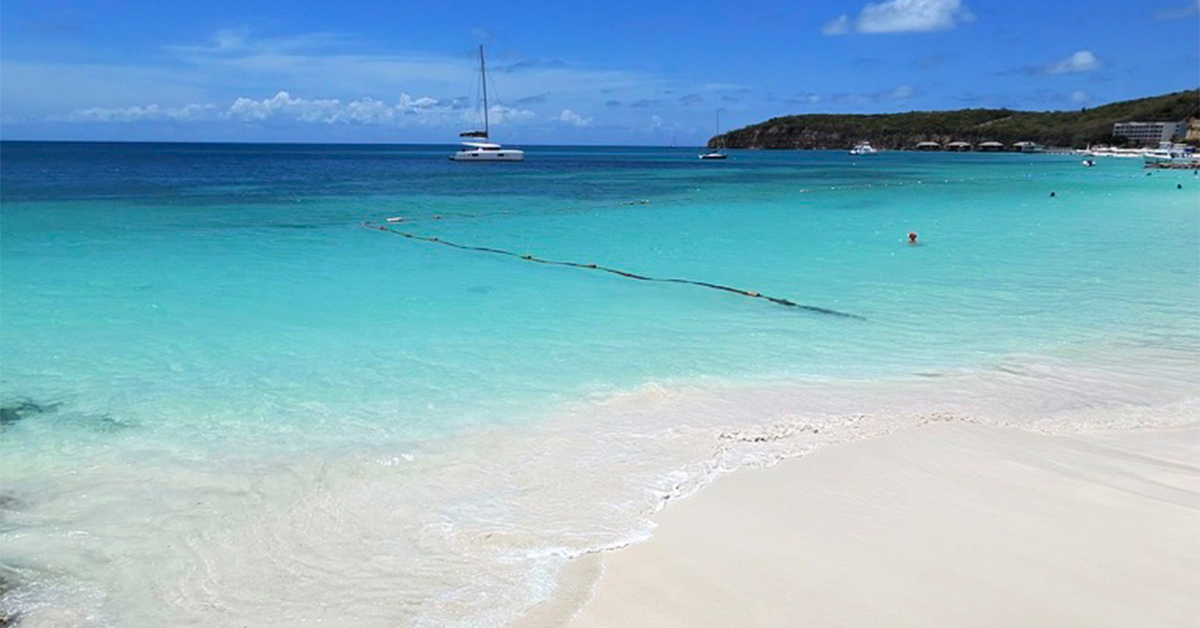
That work is happening alongside some of Antigua’s most compelling coastal environments. At Long Bay Beach, for example, an offshore reef helps create the beach’s famously calm turquoise water, while also making it a particularly good spot for snorkeling.
It’s not just about planting more coral
The scale is significant, but AnuBlue says the program is designed around something more complicated than simply putting coral back onto reefs.
The organization selects fragments from parent colonies that have demonstrated an ability to withstand pressures including higher ocean temperatures and disease.
Different genetic individuals from the same coral species are then planted near one another. The idea is to improve the potential for natural reproduction while developing larger and more genetically diverse coral populations.
AnuBlue is currently growing 15 reef-building coral species, including five species classified as critically endangered.
That diversity is an important part of the strategy: rather than concentrating on a single species, the organization is attempting to restore a broader reef ecosystem with corals that perform different functions within it.
A different side of Antigua
For travelers, Antigua is most closely associated with its extraordinary collection of beaches — traditionally said to number 365 — along with one of the Caribbean’s great sailing cultures.
Those beaches remain the centerpiece of the island’s tourism identity, whether it’s the timeless appeal of Dickenson Bay or the almost endless choice of coves and stretches of sand around the island.
But Antigua’s reefs are just as closely connected to that coastal experience.
They create habitat for marine life, help protect parts of the coastline and underpin snorkeling and diving experiences around the island. They’re also one reason Antigua has been seeing such strong interest from Caribbean travelers, with the natural environment increasingly becoming part of the destination’s broader story.
It’s part of a wider Caribbean travel movement in which the health of the marine environment and the quality of the visitor experience are becoming increasingly intertwined.
What comes next
AnuBlue says it will continue restoration alongside monitoring and research, with the longer-term goal of developing reefs capable of better withstanding environmental pressures.
The 5,800 corals represent its biggest year so far. And the 84 percent survival rate suggests that the program isn’t simply getting larger — the transplanted corals are taking hold.
For an island whose identity has always been intimately connected to the water, that makes what is happening beneath the surface an increasingly important part of Antigua’s story.