
Court case filed by 2 women to quash new Liza 1 Environmental Permit
Court case filed by 2 women to quash new Liza 1 Environmental Permit
Kaieteur News – Two citizens of Guyana, Danuta Radzik and Sinikka Henry, have applied to the High Court to quash the Liza 1 Permit which the Environmental Protection Agency (EPA) signed in favour of Esso Exploration and Production Guyana Limited (EEPGL) on May 31, 2022.
The court action follows months after the EPA issued a new environmental permit for the Liza Phase 1 project which expired in May last.
Attorney-at-law, Abiola Wong Inniss
The initial permit for the Liza 1 project officially expired at midnight on May 31, 2022. A new permit was issued for another five years giving EEPGL—a subsidiary of ExxonMobil Guyana—clearance to conduct oil exploratory activties in the Stabroek Block.
The Liza 1 oilfield in the Stabroek Block first began pumping oil in December 2019 after hydrocarbons were found in commercial quantities in 2015.
The field is being serviced by a Floating Production Storage and Offloading (FPSO) Vessel—the Liza Destiny—with an installed capacity of producing 120,000 barrels of oil per day.
According to a statement issued in relation to the case, the court action was filed in the name of applicants, Radzik – a human rights activist and a party to other legal proceedings challenging shore based activities, and Henry – a lecturer at the University of Guyana, who has previously applied for to the court to stop EEPGL from flaring.
The applicants, two women who are being represented by two female attorneys-at-law, Melinda Janki and Mrs. Abiola Wong-Inniss, are alleging that the EPA was legally prohibited from issuing the permit unless an Environmental Impact Assessment (EIA) was conducted in accordance with the Environmental Protection Act and there was full compliance with public rights to take part in that EIA.
They also claim, inter alia, that the EPA acted unlawfully by refusing to provide information on whether Esso had complied with the regulatory requirements for applying for a new permit.
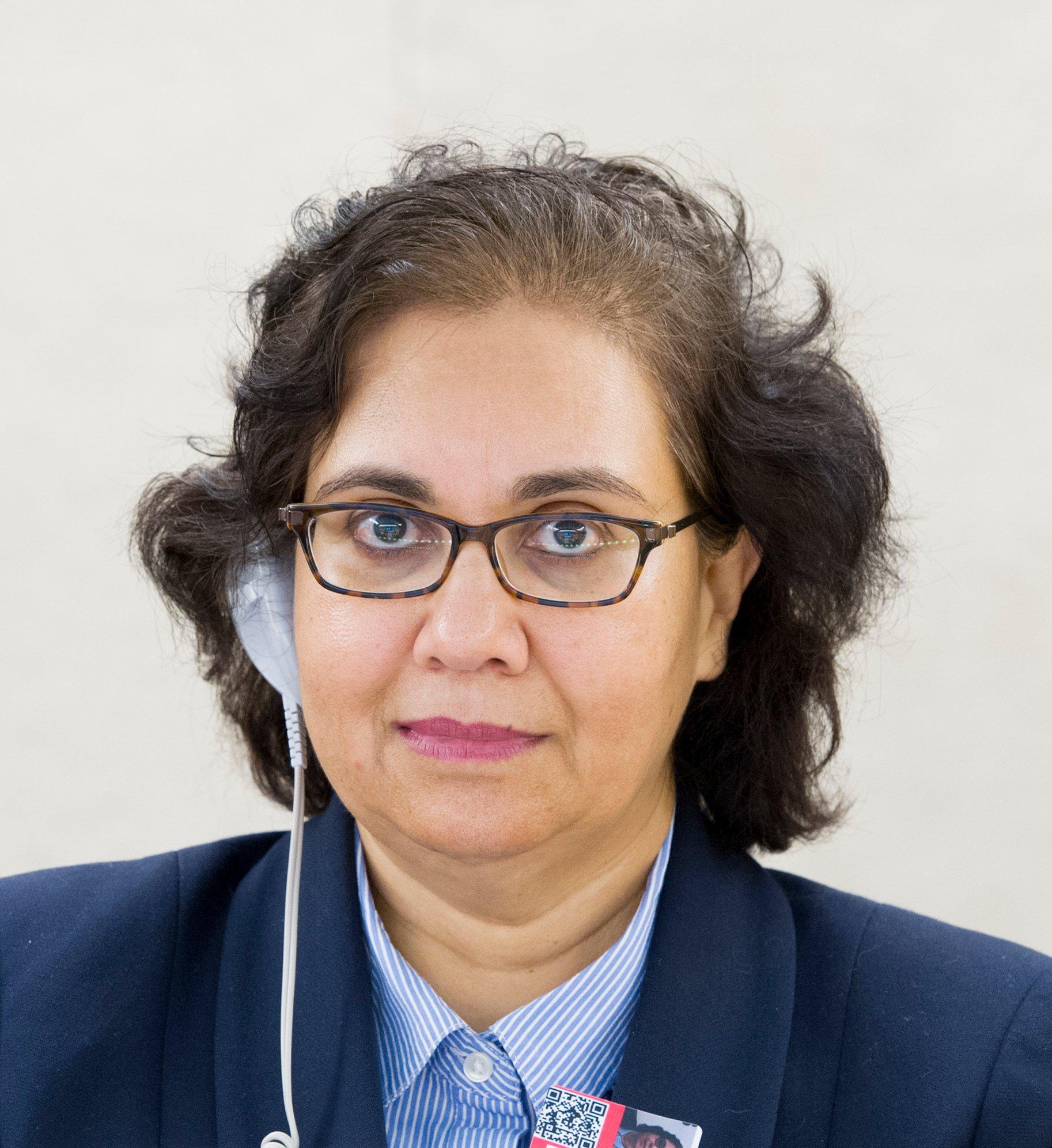
Attorney-at-law, Melinda Janki
Ms. Radzik in her affidavit stated that deepwater offshore oil drilling is an extremely dangerous exercise and that the danger to the environment and people of Guyana from the deepwater drilling has been increased as a result of the oil company using faulty equipment, flaring gas and operating above the design capacity of the Liza Phase 1 Project.
Ms. Radzik said, “The resources of Guyana, including our marine resources, belong to each and every Guyanese, including the generations to come. We are the paramount owners and custodians and as such, we have the responsibility to be consulted, to be informed, to make decisions about our resources and to ensure the protection of all our resources. The most important part of our responsibilities as custodians is to ensure we do not pollute, contaminate, harm, or destroy our precious resources through dangerous and irresponsible oil and gas/fossil fuel extraction and exploitation.”
She continued, “I am a mother and a Guyanese woman. Which mother does not first and foremost look out for and protect and care for their children and family? The Environmental Protection Agency is mandated to enforce the Environmental Protection Act to ensure that Guyana’s resources, our air, soil, rivers, creeks and seas are protected. I call on the EPA to fulfill its mandate and to help us to protect our environment for not only this generation but all those generations to come.”
Similarly, in a document to support the case, Ms. Henry stated, “Oil production results in greenhouse gas pollution that is killing the planet. We have a legal right to know about that pollution. We have a legal right to insist that the EPA protects the environment and puts our health and wellbeing above the profits of ExxonMobil. The EIA is the place to determine whether Esso can drill for oil and subject to what conditions.”
The case was filed on August 8, last, and assigned to Justice Younge on August 10. It is fixed for hearing on October 10, 2022.


