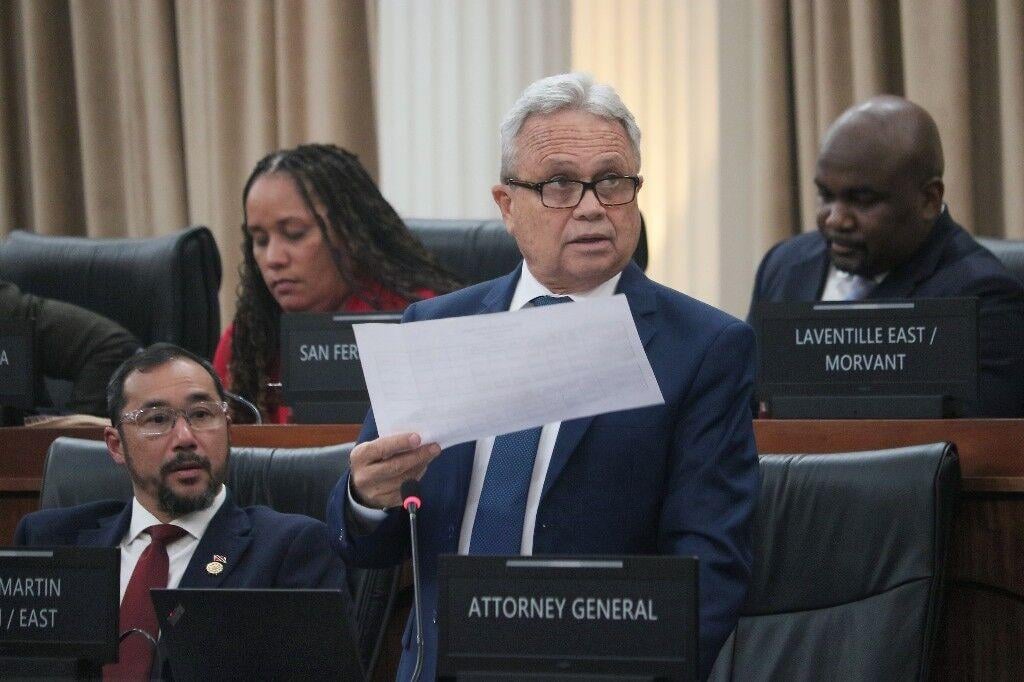
No devaluing of Trinidad dollar – Imbert
(Trinidad Express) There will be no devaluing of the TT dollar as this will not increase the availability of foreign exchange in the country.
This from Minister of Finance Colm Imbert yesterday, who said “all a devaluation will do is cause a massive spike in the cost of living and make everything more expensive”.
In a media release, Imbert stated he had taken note over the last two weeks of commentary on (1) the availability of foreign exchange, (2) the policy for distribution of foreign exchange, and (3) the exchange rate of the TT dollar.
Commentators, economists and business groups operating in the country have noted an ongoing US dollar shortage and the difficulty it poses to them.
He said the “reality is that the (International Monetary Fund’s) recommendation that the TT Government should allow the TT dollar to float, which would result in an immediate devaluation of the TT dollar, is not new”.
“As far back as 2012, the IMF recommended ‘greater exchange rate flexibility to allow pricing to play a bigger role in equilibrating the market’. This was repeated in the IMF’s 2013 Article IV Report on Trinidad and Tobago, where the IMF reiterated its view that ‘our exchange rate should be allowed to fluctuate within a wider band’.
“However, the then UNC Government told the IMF that they were not contemplating changes to the exchange rate system at that time. Again in 2014, the IMF told the then UNC Government that the foreign exchange allocation system existing at that time ‘had led to an apparently widespread and persistent recurrence of foreign exchange shortages’. However, the then UNC Government did not agree to the IMF’s recommendation that our dollar be allowed to float,” Imbert stated.
He stressed the present PNM Government has consistently stated since 2015 that it maintains the fixed exchange rate to control inflation, which is now almost the lowest in the world, and it will not impose “hardship on the poor and vulnerable” by devaluing the TT dollar.
He said it was noteworthy that Barbados, “which has been in an IMF programme for many years, and at one time within the last ten years almost ran out of foreign reserves, has resolutely refused for the last 49 years to float or devalue its dollar.
“The fact is that the Barbados dollar has been pegged to the US dollar at a rate of BB$2 to US$ 1 since 1975. Further, there are exchange control restrictions in Barbados that do not exist in Trinidad,” said the Minister.
He suggested attention should be paid to how Barbados has managed to keep its dollar fixed for so long and how it has managed to restrict capital flows, despite being in an IMF programme.
Forex distribution
Commenting on the issue of the distribution of foreign exchange to the business community, as announced previously he will be holding consultations over the next month with various interest groups to determine the best way forward.
“Again, this is not new, and it was based on representation made by the business community that the Government make forex available in a targeted manner, that the forex windows at the EximBank, which from all accounts are working well, were created four years ago.
Imbert said Government signalled months ago to clients of the EximBank that it was reviewing the list of essential imports and the quantum of foreign exchange made available through that particular forex window, which was created by the Ministry of Finance in 2020.
He said that the forex windows created at the EximBank for export manufacturers and the window for essential imports are innovations by the present-day Government meant to ensure better focus, equity and rationality in the distribution of the Government’s foreign exchange.
He added: “The essential imports facility has worked well for the last four years but it needed restructuring because there is no longer any need for preferential access to forex for the importation of items such as face masks, respirators and hand sanitisers.”