Economic growth, environmental responsibility shouldn’t be conflicting objectives – Finance Minister – INews Guyana
As Guyana continues to demonstrate strong economic performance, Senior Minister with Responsibility for Finance, Dr Ashni Singh, says that this is being done on a dual track along with the country’s equally strong environmental credentials.
Dr Singh made these remarks during a recent appearance on a special edition of the Starting Point podcast, where he discussed the efforts of the People’s Progressive Party/Civic (PPP/C) Governments over the years to ensure Guyana’s sustainable economic development.
“For a number of years, this Government and indeed previous People’s Progressive Party/Civic Governments have expended a lot of time and effort and devoted a lot of our policy space to addressing exactly these two issues.”
“On the one hand, ensuring that we lay the foundation for strong economic growth, and secondly, ensuring that that strong economic growth is achieved in a sustainable manner, with sustainability interpreted in all of its dimensions, including fiscal and debt sustainability, but also the very strong environmental dimension to sustainability, because it’s impossible to speak of sustainability without taking into consideration factors such as climate,” the Minister posited.
According to Singh, the local economy’s consistently strong performance and anticipated continued performance for the rest of this year are well documented both in local reports and a number of international publications from leading institutions such as the World Bank and the International Monetary Fund (IMF).
But while Guyana has been on a longer-term growth trajectory driven by prudent fiscal policies that ensured strong economic performance, the Finance Minister pointed out that this could not have been achieved without also considering the climate and environmental realities.
He noted that Guyana long recognised the importance of pursuing these two agendas simultaneously, and this is reflected in its Low Carbon Development Strategy (LCDS) – a national policy framework crafted by former President Bharrat Jagdeo that aims to combat climate change, protect the country’s vast rainforests, and build a sustainable, low-carbon economy.
Under the LCDS model, Guyana struck a deal with Norway in 2009 that saw the country benefiting from US$250 million for keeping its vast forests intact.
When the Irfaan Ali-led PPP/C Administration took office in 2020, the strategy was revised to LCDS 2030, with emphasis placed on advancing efforts to ensure Guyana received payment for its forest climate services.
Through these efforts, Guyana became the first country in the world to get jurisdictional certification under the ART-TREES in 2022 and later secured a landmark US$750 million carbon credit sale agreement with the United States’ energy major, Hess Corporation.
Since then, the country has sold its certified carbon credits to a number of other major international companies, including tech giant Apple Inc.
Additionally, Guyana also secured the world’s first certification under the Carbon Offsetting and Reduction Scheme for International Aviation (CORSIA) mechanism – the International Civil Aviation Organisation (ICAO)’s global emissions reduction programme. To date, the country has sold its CORSIA-certified carbon credits to more than 20 airlines through a partnership with the International Air Transport Association (IATA).
According to Minister Singh, “Guyana has been at the forefront of the global discourse and the devising of innovative global solutions to the challenges of climate change. We’ve been at the forefront, at the intellectual cutting edge, at the policy cutting edge and at the implementation and execution cutting edge…for a long time, not yesterday, not the day before yesterday. Just like our economic performance is not a one-year occurrence. We’ve been doing this for a long time and achieving remarkable success.”
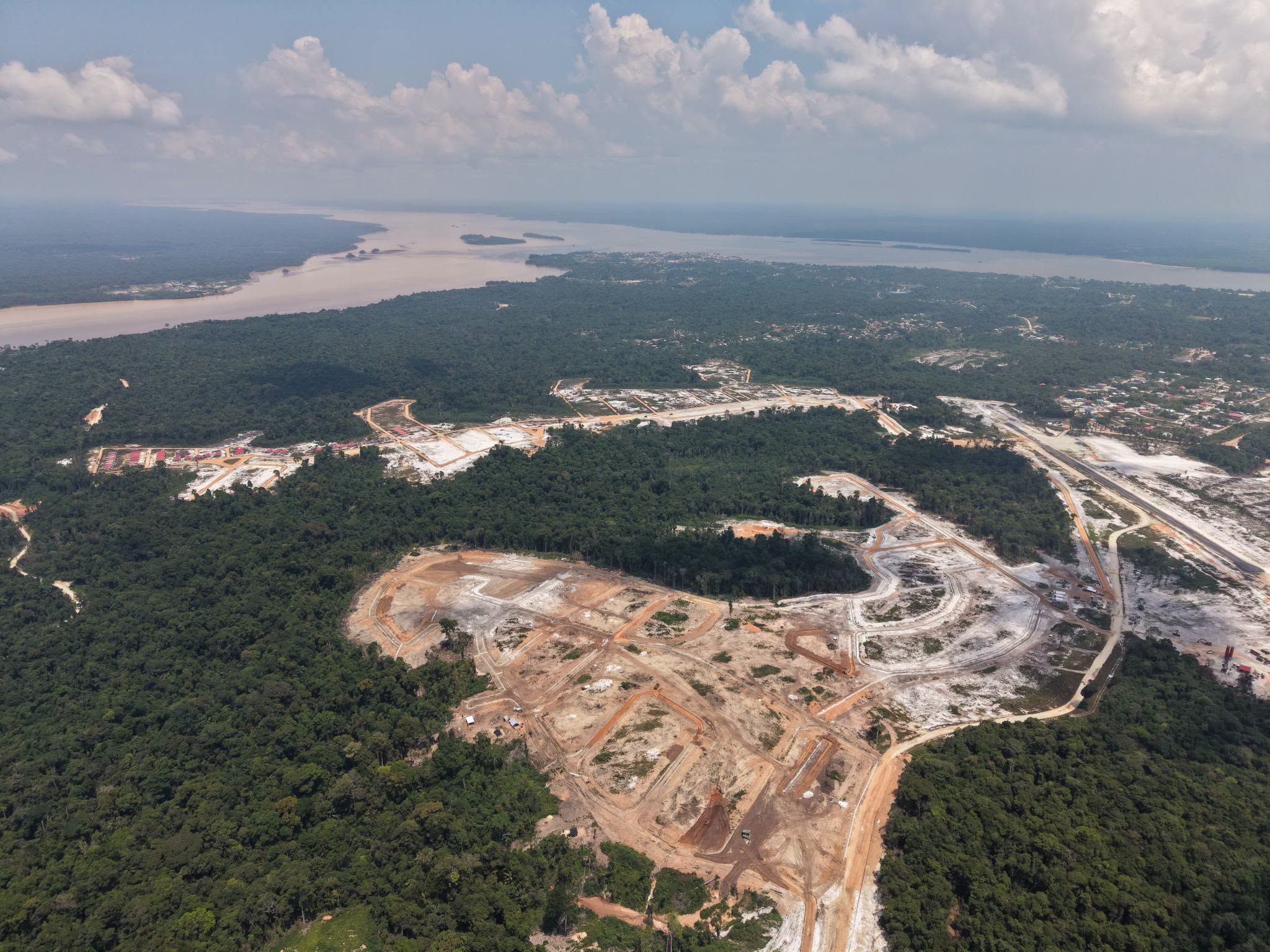
In fact, the Finance Minister contended that Guyana has positioned itself as a global leader in this regard, demonstrating to the world that economic prosperity does not come at the cost of the environment.
“What we have been doing in Guyana demonstrates that economic growth and environmental responsibility need not be conflicting objectives but instead can be complementary objectives and are complementary objectives, if approached from the right policy posture. And I think we’ve been able to achieve that in Guyana and demonstrate it: that economic growth and prosperity and climate responsibility and sound climate policies need not necessarily conflict with each other. In fact, they should not, and they do not, if done properly. And I think we’ve been a good example of that,” he posited.
“Any conversation about the [economic growth in the] long term has to incorporate into it climate sustainability, biodiversity, nature and the environment, because the world literally exists, or existence depends on climate sustainability. And climate sustainability can only be realised with dedicated climate action and action to protect our natural assets of the world, including our forests and including the rest of our biodiversity,” Dr Singh added.
Related
Discover more from INews Guyana
Subscribe to get the latest posts sent to your email.