‘Guyana’s economy cannot be modernised by clinging to archaic banking systems’ – Guyana Chronicle
–President Ali says, maintains push for strengthening regulatory, monitoring capabilities
-announces imminent roll out of E-Wallets, national payment system
PRESIDENT, Dr Irfaan Ali has reaffirmed his administration’s commitment to a far-reaching transformation of Guyana’s financial sector, signalling a decisive shift from outdated banking practices towards a modern, technology-driven system.
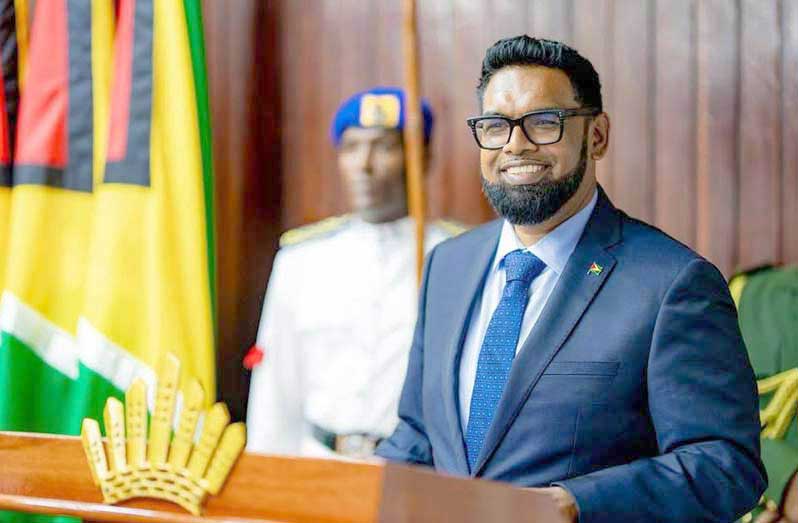
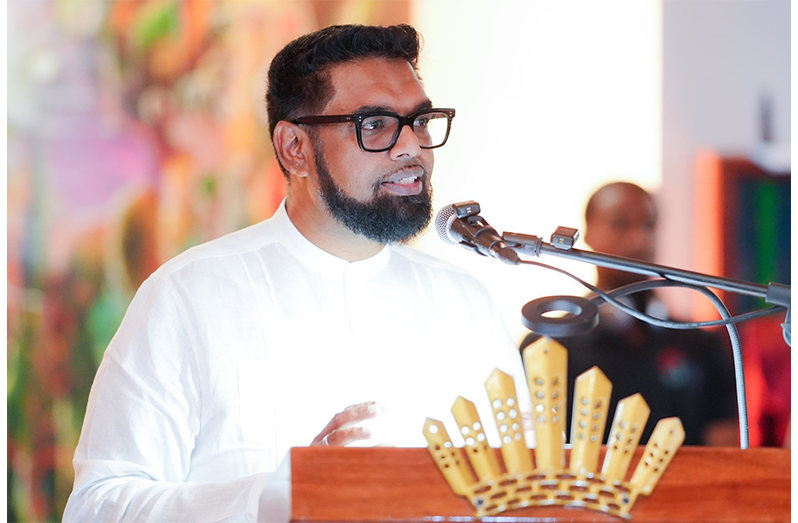
Speaking at the launch of Guyana Bank for Trade and Industry’s (GBTI) private banking services last Friday, the Head of State emphasised that the reforms will be structural rather than superficial, targeting the foundations of the banking system to support long-term economic modernisation.
“This transformation will not be cosmetic. It will not be incremental. It will run deep into the very structure of our banking system and unleash significant change. We are going to launch the national payment platform,” the President said.
Central to this transformation is the planned launch of a national electronic payment platform, alongside the introduction of electronic wallets (e-wallets) to enable seamless, cashless transactions for everyday activities.
This he explained, will allow Guyanese to make payments electronically, including through mobile devices, while operating on common platforms supported by robust security features. The development of this system, he noted, requires significant investment in infrastructure and an enabling environment that can sustain modern financial services.
To support these changes, the government intends to strengthen the regulation and oversight of the commercial banking sector by enhancing the regulatory and monitoring capabilities of the central bank. In collaboration with financial institutions, new mechanisms will be created to advance the development of the banking sector while reducing systemic risks.
“If we are to go the full mile, we have to create the enabling environment, build the infrastructure and the structures that are needed to support us. So first, [we] will improve the regulation and oversight of the commercial banking sector by strengthening the regulatory and monitoring capabilities of the Central Bank. We will also, in consultation with the banking sector, create various vehicles through which we can advance the development of the banking sector, ensuring that we reduce risk,” the President explained, adding: “We are forward looking and that we are not bureaucratic, because the financial system cannot be bureaucratic. We intend to ensure more efficient and secure deposit and payment systems. We cannot modernise the economy by clinging to archaic banking systems and practices.”
The shift towards electronic payments is also aimed at reducing Guyana’s reliance on cash-based transactions. The president highlighted the inefficiencies associated with citizens having to physically visit banks, often spending lengthy periods waiting to withdraw or deposit funds. The loss of productive time, he argued, represents a tangible economic cost that can be mitigated through modern electronic platforms.
“We have to graduate to a system that is less cash based and more electronically driven. Too many citizens still have to physically go into banks, join the lines and spend valuable time just to withdraw or deposit money. This is not efficient. If you look at the productive time that is lost in lines of the bank and quantify the value of that time, it tells you the economic costs of not modernising. With modern electronic platforms, these practices must and will decline.”
A national electronic payment system he said would deliver broader economic benefits, including improved business efficiency, stronger tax collection, streamlined wage payments, and more effective distribution of government grants and other transfers.
“A modern economy cannot run on yesterday’s payment system. This is why the eventual development of a national electronic payment system may improve business efficiency, strengthen tax collection, streamline wage payments, facilitate government cash grants, and other payments, and modernise public and private transfers,” he said.
According to him, these plans are framed within a wider objective of greater financial inclusion, with the banking system becoming more accessible to individuals.
“Banking was created for people and not the other way around. A modern banking system must therefore become more accessible to individuals. In short, we are moving decisively towards greater financial inclusion,” he said.
The government’s earlier collaboration with banks to reduce mortgage interest rates was cited as an example of inclusive finance in practice, enabling thousands of Guyanese, including public servants and young professionals, to afford home ownership. Together, these initiatives underscore a broader strategy to ensure that the financial sector supports people, productivity, and sustainable economic growth.
“On our part, government has already worked with the banking sector to reduce mortgage interest rates,. The impact has been profound. Thousands of ordinary Guyanese teachers, public servants, nurses, young professionals have been able to afford and build their own homes. That is what inclusive finance looks like in practice,” the President said.
President Ali had disclosed that over 600,000 Guyanese are now integrated into the country’s financial system.
He had called on Guyanese to ensure they open bank accounts, as the government aims to deliver social cash transfers via the banking system.
Additionally, online banking is operational at four commercial local banks, making the process of creating a bank account much easier, including for those in the hinterland regions.