Monday is Budget Day – Guyana Chronicle
–Minister Singh says it will be firmly anchored government’s manifesto commitments
SENIOR Minister in the Office of the President with Responsibility for Finance, The Honourable Dr. Ashni Singh, on Monday announced that Budget 2026 will be presented to the National Assembly on January 26, 2026.
Speaking on the upcoming presentation, the finance minister emphasised that Budget 2026, the first national budget since the People’s Progressive Party/Civic’s (PPP/C) re-election to office, will serve as the operational blueprint for the PPP/C’s manifesto and is set to translate the comprehensive promises made during the 2025 election campaign into tangible benefits, a Ministry of Finance press release said.
It added that Minister Singh affirmed that the budget is “firmly grounded in the comprehensive and inspiring manifesto that we would have taken to the people of Guyana in the run-up to the 2025 elections.”
“As many would recall, the manifesto outlined a comprehensive agenda for advancing the transformation of our country, and very importantly, for creating a Guyana that is full of opportunities for all Guyanese people,” Minister Singh stated.
He further assured that at the core of Budget 2026 is a commitment to human development and noted that the fiscal plan will focus heavily on creating opportunities for citizens to improve their lives and livelihoods.
“The Guyana that we are building is a Guyana that is full of opportunities for every single Guyanese citizen to uplift themselves,” Dr. Singh stated according to the press release.
Budget 2026 promises to be a vital moment for Guyana and will ensure that the economic growth of the nation translates directly into individual growth and prosperity for every single Guyanese family, it added.
Further, the upcoming budget will also build on the expansive fiscal framework established in the 2025 budget, which totalled G$1.382 trillion and was anchored on the theme, “A Secure, Prosperous and Sustainable Guyana.”
The 2025 manifesto, developed after extensive consultations with private sector actors, religious organisations, youth and women’s groups, and the wider public, provides the policy framework for the upcoming budget.
Budget 2026 will reflect this vision for national transformation, continuing the government’s agenda for sustainable economic growth.
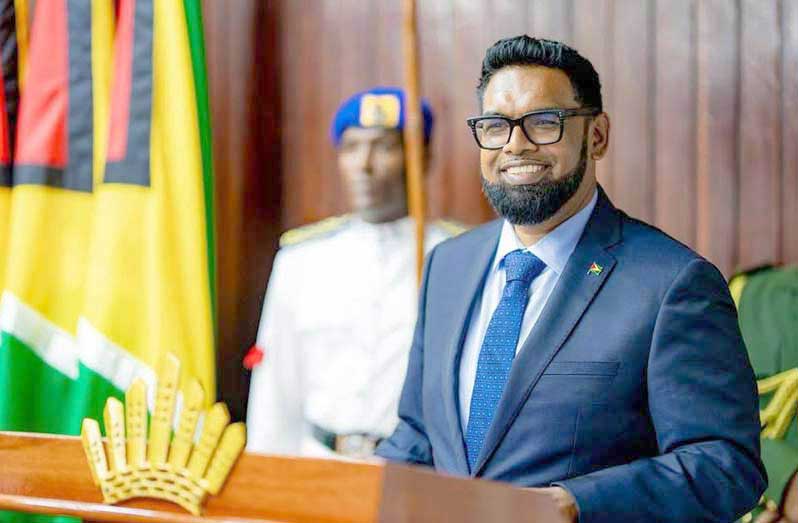
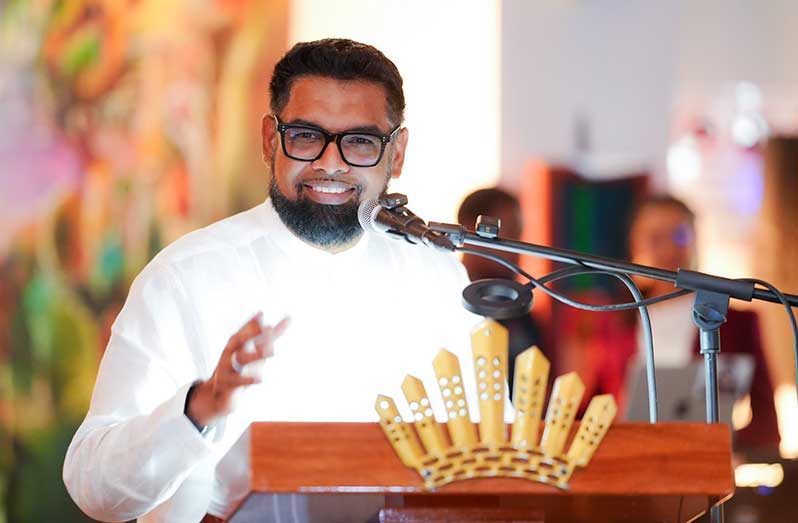
In December 2025, President Dr Irfaan Ali unveiled a sweeping five-year agenda for what he described as “the most ambitious phase” of Guyana’s economic and social transformation, anchored in diversification, digitisation, and broad-based prosperity.
President Ali said that the re-elected PPP/C administration would “build on the historic achievements” of the past five years, with a sharpened focus on ensuring that growth is widely shared.
At the centre of the plan is a major push to deepen financial inclusion and expand access to capital.
He revealed that the soon-to-be-established Guyana Development Bank, capitalised with US$200 million, will provide zero interest, zero collateral, Micro, Small and Medium-sized Enterprises (MSMEs), women-owned businesses, young entrepreneurs, and persons living with disabilities, alongside structured mentorship and training.
The President also announced the creation of a junior stock exchange, and new investment vehicles to allow ordinary Guyanese here at home and in the diaspora to participate directly in large industrial projects through equity promising guaranteed returns.
“We are building an ecosystem where financial knowledge, unprecedented access to capital and new avenues for investment converge,” he said.
MSMEs will be able to access up to $3 million without collateral at zero interest, with a further $7 million available through co financing with commercial banks at preferential rates. Agent-banking networks, digital banking, and mobile wallets will be rolled out to reach remote communities, supported by legal and regulatory reforms, and a modernised Bank of Guyana.
He announced, too, that Budget 2026 will make provision for a $100,000 cash grant to every Guyanese citizen aged 18 years and older.
He further disclosed that additional cash grants will be paid over the next five years, as the government continues to roll out measures aimed at improving household welfare, and strengthening disposable income.
Alongside new financing instruments, the President pledged additional tax incentives and targeted cash grants, building on more than G$70 billion already distributed in direct transfers in the government’s last term in office, and extensive tax reductions on income, fuel, and key household costs.
President Ali stressed that diversification would run “both vertically and horizontally,” with value-added agriculture, manufacturing, tourism, and the creative industries all identified as pillars of a more resilient economy.
JOBS, EDUCATION & HEALTH
On the social side, the President vowed to sustain and expand jobs, and to continue “massive investments” in education and health.
Education will remain free at all levels, with the Guyana Online Academy of Learning (GOAL) and the new AI driven Digital School offering thousands more scholarships and personalised learning nationwide.
In health, government spending has almost quadrupled since 2019, with 12 new hospitals underway, telemedicine at over 80 sites, and plans for a modern oncology centre and a life-sciences park.
The Head of State also reiterated commitments to build 40,000 new homes over the next five years, improve water and sanitation systems, modernise transport and urban infrastructure, and advance a comprehensive digital government platform to make public services faster, more transparent, and accessible.
“For us, the people come first, always. It is a guiding principle, putting people at the centre of every decision that shapes the economic blueprint,” the President said.
NEW TAX INCENTIVES
Meanwhile, Dr Ali revealed a wide-ranging package of tax incentives aimed at deepening economic diversification, encouraging private investment, and easing the financial burden on households, small businesses, and vulnerable groups.
Central to this is the creation of special development zones which will be detailed in the 2026 national budget.
These zones will operate under a tax-free incentive regime, targeting sectors that generate export earnings, or replace imports, with a particular emphasis on agricultural technology, agro processing, and non-oil economic activity.
In a bid to support both businesses and families that rely on ‘pick up’ vehicles, the government, he said, will introduce a flat tax on double cab pick-ups, regardless of age.
Vehicles up to 2,000cc will attract a tax of $2 million, while those between 2,000cc and 2,500cc will face a $3 million tax.
Signalling an intent to reward work and encourage formal employment, the administration has pledged to continue raising the income tax threshold over the next five years, with the goal of approaching levels seen in more developed economies.
At the same time, it intends to abolish net property tax on individuals, a move framed as an incentive for citizens to build savings and assets.
“These plans represent a blueprint for transformation that can be tangible in your daily life, in the work you do, the wages to earn… with your trust and partnership will turn this moment into a movement, a momentum that carries growth in our homes,” the President said.
A series of targeted tax measures is expected to stimulate investment in care and social services. Companies engaged in childcare and elderly care will see corporation tax removed on income earned from these services.
The government is also expected to co-invest in childcare and elderly-care facilities from 2026, on the condition that providers benefitting from concessions agree to cap their fees at affordable rates.