Austrian company to take Guyana Government to international arbitration over stoppage of payments for construction contracts – News Source Guyana
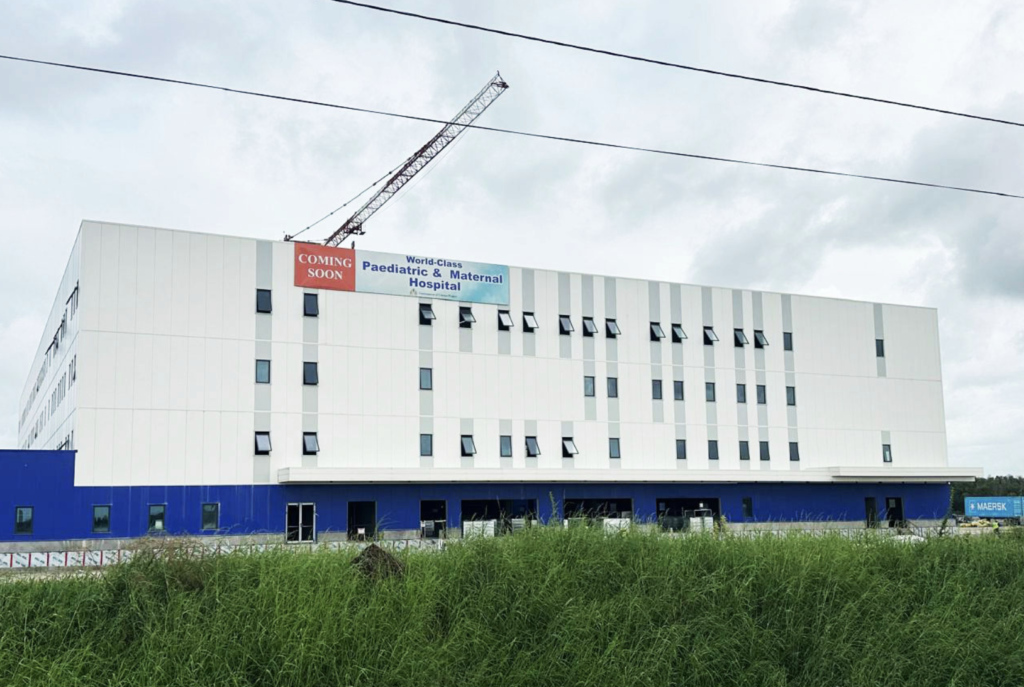
International healthcare infrastructure provider, VAMED Engineering of Austria, has announced that it will be initiating arbitration proceedings at the level of the International Chamber of Commerce (ICC) against the Government of Guyana over its failure to pay some €45.53 million for works done on two public health infrastructure projects – the Guyana Pediatric and Maternal Hospital and the New Amsterdam Hospital Campus.
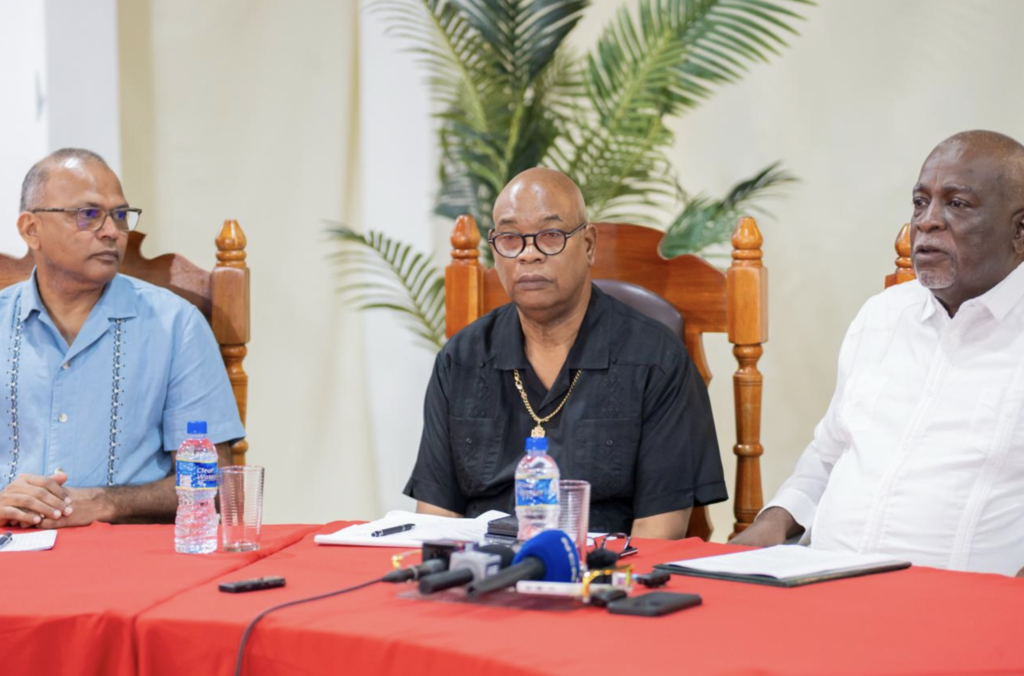
Counsel for VAMED Engineering, Nigel Hughes and VAMED’s Institutional Representative, Dr Joao Pedro da Silva Teles made the announcement today during a press conference held at the Guyana Marriott Hotel.
The company’s Regional Manager, Diana Lopes appeared virtually.
On the 8th June, 2022, VAMED Engineering signed a contract with the Ministry of Health for the design and construction of the Guyana Pediatric and Maternal Hospital valued at €149 million.
One year later, the two sides signed a contract for the design and construction of the New Amsterdam Hospital Campus valued €150 million.
Attoerney Hughes said the projects were progressing when more than a year ago, the Government through the Ministry of Health ceased payments, although the works done were certified by the Government’s engineers.
“VAMED’s total contractual claims amounting to overdue EUR 45.53 million including certified payments of at least EUR 19.5 million, and variations, indexation, additional works, and other contractual entitlements. The Government’s own Engineer has separately estimated the Government’s indebtedness to VAMED at approximately EUR 37.94 million. These are not disputed or speculative claims. They arise from contractual mechanisms and Interim Payment Certificates issues under the contracts themselves,” Hughes told reporters.
The last payment was received in May 2025, and according to the company, the Government’s failure to effect the requisite payments has significantly affected the progress of the two projects.
According to Hughes and da Silva Teles, repeated attempts were made by the company to have the outstanding sums paid by the Government, but to no avail.
Hughes said to compound the situation, the financing framework supporting the construction of the Guyana Pediatric and Maternal Hospital collapsed.
It was explained that the project was financed through an Export Credit Facility backed by UK Export Finance (UKEF) and funded by the UniCredit Bank Austria with the Government of Guyana acting as the borrower. However, the loan agreement expired in November 2025, as well as the associated export credit guarantee.
“The Government failed to renew or extend the financing arrangements despite repeated communications from both UniCredit Bank Austria AG and EK Export Finance regarding the impending expiration and the need for renewal. This raises an unavoidable question: Why would a government permit a critical export credit facility supporting one of its most important healthcare infrastructure projects to expire, thereby removing a key payment security mechanism for the contractor and jeopardizing the completion of the project itself? In VAMED’s view, the failure to maintain the agreed financing structure, combined with the continued non-payment of certified amounts, has severely undermined the economic foundations of the projects and created a financial impasse for which the Government must be held accountable for,” Hughes said.
He said export credit financing is an essential component of risk management in international infrastructure projects, and the loss of that protection significantly increased the risks borne by VAMED.
On June 2, 2026, the Government issued notices of intention to terminate the two contracts.
Asked whether project delays were among the contributing factors, the company reps and their attorney maintained that any significant delay was a result of Government’s indebtedness to VAMED’s Engineering.

“Any reduced project activity is a direct result of the Government’s failure to pay their certified outstanding indebtedness to VAMED. The purported termination of the contract by the Government was wholly misconceived and in breach of the terms of the agreements. VAMED rejects any attempt to call performance bonds or guarantees while the Government itself remains in substantial default of its payment obligations,” Hughes said.
It was noted that the situation has also resulted in significant logistical issues, with dozens of containers still to be cleared.
Hughes said the company is left with no other alternative but to commence arbitration proceedings in an effort to retrieve the outstanding sums including interests on overdue certified sums.
“VAMED did not choose arbitration lightly. For many months, VAMED sought a responsible and commercially reasonable solution that would protect these important hospital projects and serve the interests of the people of Guyana. However, the Government cannot continue to benefit from certified works while failing to meet its own payment obligations,” the attorney said.
According to VAMED, approximately 67% of the Guyana Pediatric and Maternal Hospital is completed and approximately 27% of the New Amsterdam Hospital Campus is completed.